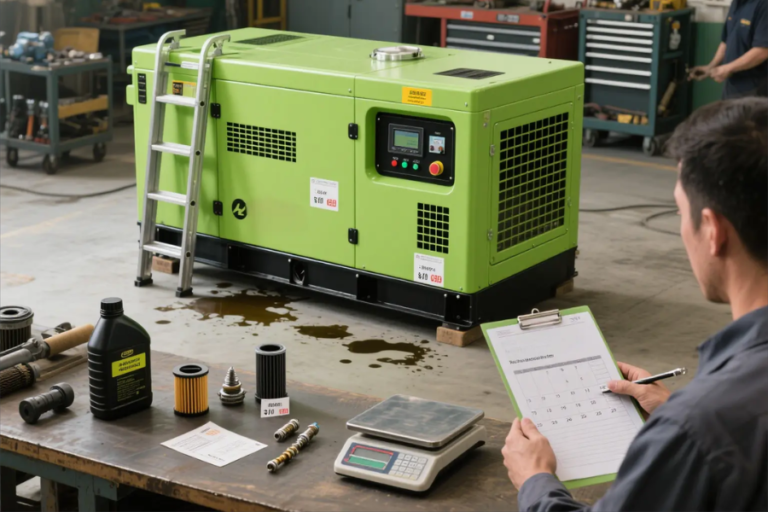
A generator becomes less cost-effective the moment its operating demands outgrow its actual benefit. Homeowners usually realize this only after years of fuel spending, frequent maintenance, or choosing the wrong capacity for their lifestyle. Cost-effectiveness is not only about the purchase price but also how often the generator runs, how efficiently it handles household loads, and how much upkeep it requires over its lifetime. Mechanical generators follow predictable cost curves, and many households unknowingly exceed them. Solar-based systems reset that curve entirely by removing fuel, reducing maintenance, and offering modular upgrades. The Anker SOLIX C2000 Gen 2 with a 400W solar panel becomes a useful reference point in this conversation because it replaces many ongoing expenses with stable, predictable performance. Understanding the tipping point helps homeowners evaluate the true cost of generator for home systems.
The Conditions That Make a Generator Lose Its Cost-Effective Advantage
Fuel Spending Begins to Outweigh Real Usage
Fuel becomes the fastest driver of lost cost-effectiveness. A generator purchased for occasional outages may run rarely, but large models still consume significant fuel during monthly testing or unexpected long outages. Homes in storm-prone areas feel this cost more acutely as each hour of runtime multiplies the expense. Fuel volatility also makes budgeting unpredictable. Solar generators bypass this challenge entirely because sunlight becomes the primary energy source. A system like the C2000 Gen 2 recharges through AC or solar, and its efficient idle power means it runs longer on stored energy without ongoing fuel bills. When fuel costs exceed the generator’s real value to the household, the system has crossed the cost-effectiveness threshold.
Maintenance Requirements Begin to Surpass Ownership Value
Mechanical engines demand maintenance—oil, filters, spark plugs, and regular inspections. Larger generators require more frequent service, and professional visits grow more expensive over time. When these maintenance cycles become financially heavier than the generator’s contribution to household resilience, the system stops being economical. Solar generators, by contrast, contain no combustion components and therefore eliminate these recurring costs. The C2000 Gen 2 requires no engine service, no lubrication, and no mechanical cleaning, so its long-term budget footprint stays consistent. A generator stops being cost-effective when maintenance becomes unavoidable, yet adds no additional benefit to performance or reliability.
Mismatched Capacity Creates Ongoing Financial Loss
Capacity mismatch—either oversized or undersized—can drain a homeowner’s budget. Oversized generators burn more fuel, cost more to install, and often run at inefficient load levels. Undersized generators strain under peak demand and degrade faster, pushing households toward premature replacements. Solar systems reduce this mismatch risk. The C2000 Gen 2 delivers 2,400W rated output with 4,000W peak, suitable for essential appliances, and offers capacity expansion through an optional BP2000 battery. This modularity keeps the system closer to the homeowner’s true needs. A generator becomes non-cost-effective when its size no longer aligns with actual home demand and starts to create avoidable expenses year after year.
The Household Realities That Push Generators Past Their Cost-Effective Limit
High-Demand Homes Increase Wear Faster Than Expected
Homes with multiple refrigerators, heavy HVAC loads, or continuous electronics usage place significant demand on generators. Mechanical units forced to run long hours accumulate wear that shortens their lifespan. Replacements often occur sooner than expected, erasing the value of the original investment. Solar generators handle high usage differently because they do not rely on combustion. The C2000 Gen 2 can power a dual-door refrigerator for long durations thanks to efficient power management and low idle consumption. This reduces mechanical stress and delays the need for reinvestment. A generator becomes cost-ineffective when its lifespan shortens due to unforeseen household load demands that it cannot accommodate sustainably.
Frequent Outages Expose the True Cost Curve
Homes that experience more outages than anticipated quickly discover that generators designed for occasional use become expensive under heavy cycles. Every outage adds fuel expense, maintenance wear, and runtime labor. These cumulative factors push traditional systems beyond their intended economic design. Solar generators invert this situation because increased sunlight exposure often adds free power rather than cost. With four adjustable solar angles and IP67 protection, the C2000 Gen 2’s 400W solar panel continues operating through varied weather, helping the system remain efficient even during extended outages. Cost-effectiveness disappears the moment outage frequency forces a generator to function more than it was economically built to.
Fixed-Installation Expenses Become Disproportionate
Large mechanical generators require site preparation, permits, transfer switches, and sometimes fuel storage infrastructure. These installation costs may exceed the realistic value of what the system provides. If the generator serves only a fraction of its potential—or remains idle for most of the year—these upfront expenses lose economic justification quickly, especially when the cost of generator for home ownership includes professional labor and compliance fees. Portable solar generators do not require permanent installation, fuel plumbing, or electrical upgrades. The C2000 Gen 2 arrives ready to operate, plugs into typical home appliances, and can power an RV via a TT-30 port. A generator stops being cost-effective when fixed installation expenses overshadow its actual contribution to household resilience and daily practicality.
Conclusion
A generator stops being cost-effective when its ongoing requirements—fuel, maintenance, installation, or mismatched capacity—outweigh the real benefits it provides. Homes with higher-than-expected demand, more frequent outages, or oversized systems reach this tipping point fastest. The long-term curve becomes steeper as mechanical wear, fuel prices, and service needs escalate. Solar-based systems shift this equation by removing most recurring expenses and offering flexible capacity that adapts to home usage. The Anker SOLIX C2000 Gen 2 and its 400W solar panel highlight how modern power stations stabilize ownership costs while maintaining reliable performance during outages. Understanding when the moment cost-effectiveness fades helps homeowners invest wisely and avoid silent long-term financial drains.
Don’t miss out on any news—keep in touch for real-time information, visit: Gessolini.org