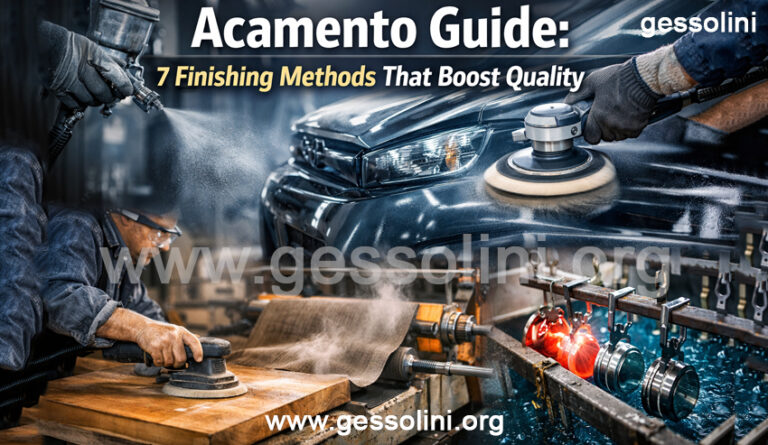
Modern industries rarely deliver raw materials directly to consumers. Instead, products undergo careful surface enhancement, protective treatment, and structural finishing before reaching the market. These final refinements improve durability and elevate aesthetics. Many manufacturers depend on advanced surface finishing, industrial coatings, material protection, and quality control systems to ensure that components perform reliably over time.
What Is Acamento? A Simple Explanation of the Finishing Concept
In manufacturing and construction, the term Acamento refers to the final stage of surface refinement, where products receive finishing treatments that enhance both strength and visual appeal. This step often involves coating application, polishing techniques, material sealing, and protective finishing layers. As a result, raw surfaces transform into reliable structures capable of resisting moisture, friction, and environmental stress.
Moreover, finishing processes contribute significantly to product quality. A well-treated surface improves structural durability, corrosion resistance, material stability, and visual uniformity. Consider wooden furniture as an example. Without proper finishing, wood absorbs humidity and deteriorates quickly. However, protective coatings strengthen the surface and highlight natural grain patterns. Consequently, the finished product lasts longer and maintains consistent performance in everyday environments.
| Quick Bio: Finishing Concept Overview | Details |
| Concept | Final stage of surface finishing, material treatment, and protective coating |
| Primary Goal | Improve durability, visual quality, and product lifespan |
| Common Materials | Wood, metal alloys, concrete, polymers, textiles |
| Industrial Applications | Construction, automotive manufacturing, furniture design, textiles |
| Technologies Used | Automated coating systems, abrasive polishing tools, industrial sealants |
| Key Benefits | Corrosion resistance, wear protection, aesthetic improvement |
Why Acamento Is Important in Modern Manufacturing and Design
Manufacturers today compete not only through innovation but also through product reliability. High-quality finishing techniques help companies achieve engineering precision, performance consistency, surface protection, and industrial durability. Consequently, products withstand friction, moisture, and temperature fluctuations far better than untreated materials.
Furthermore, modern design prioritizes both functionality and appearance. For instance, automotive panels undergo careful coating treatment, abrasion resistance testing, paint finishing, and protective sealing before assembly. These steps prevent corrosion and ensure smooth reflective surfaces. As a result, consumers receive products that perform efficiently while also delivering the sleek visual finish expected in contemporary industrial design.
How the Acamento Process Works (Step-by-Step Guide)
Every finishing procedure follows a structured workflow designed to ensure uniform quality. Initially, technicians prepare the surface using cleaning solutions, abrasive sanding, material conditioning, and degreasing treatments. This preparation stage removes dust, oils, and microscopic irregularities. Consequently, subsequent layers adhere properly and create stronger bonds with the underlying material.
After preparation, specialists apply finishing layers through spray coating systems, chemical sealants, protective varnishes, and controlled curing processes. These treatments solidify during drying stages and form durable barriers against environmental damage. Quality inspectors then measure surface smoothness, coating thickness, adhesion strength, and visual uniformity. As a result, finished components meet strict industrial performance standards before leaving production facilities.
Also read this article: Discovering Aurö
Common Types of Acamento Used Across Different Industries
Various industries employ specialized finishing techniques depending on the material involved. In construction, professionals rely on architectural surface finishing, cement treatment, protective coatings, and decorative wall textures to protect buildings. These methods shield structures from weather exposure while simultaneously improving interior aesthetics.
Meanwhile, manufacturing sectors apply metal finishing processes, wood polishing systems, textile treatment methods, and industrial surface coatings to optimize product performance. Furniture manufacturers highlight wood grain using varnishes. Textile producers enhance fabric softness through chemical treatments. Similarly, automotive manufacturers rely on corrosion-resistant coatings to preserve vehicle components. Each industry adapts finishing techniques according to functional requirements and environmental conditions.
Tools, Materials, and Technologies Used in Acamento
Finishing work relies heavily on specialized equipment designed for precision and consistency. Technicians often operate orbital sanders, spray guns, abrasive polishing machines, and automated coating units to achieve smooth surfaces. These tools allow operators to distribute finishing materials evenly while controlling thickness and texture across large production batches.
Equally important are the materials used during the finishing stages. Industries commonly apply polyurethane coatings, epoxy sealants, protective lacquers, and industrial resins. These compounds create durable barriers that resist chemical exposure and mechanical wear. Additionally, new technologies such as robotic polishing systems and computer-controlled finishing equipment allow manufacturers to maintain exceptional accuracy during large-scale production operations.
Key Benefits of Proper Acamento for Products and Structures
Quality finishing offers far more than visual improvement. Proper treatment strengthens materials by adding corrosion protection, abrasion resistance, moisture barriers, and thermal stability. These enhancements reduce maintenance costs and extend the operational lifespan of products exposed to harsh environments.
Additionally, refined surfaces increase customer satisfaction. For example, smooth architectural walls, polished furniture, and glossy automotive finishes demonstrate professional craftsmanship. Manufacturers achieve this through protective sealants, surface smoothing techniques, durable coatings, and performance testing procedures. Consequently, finished products maintain both aesthetic beauty and structural integrity throughout their service life.
Acamento vs Polishing vs Surface Finishing: What’s the Difference?
Although these terms often appear interchangeable, they represent different concepts within manufacturing. Polishing focuses primarily on creating smooth reflective surfaces through abrasive buffing, micro-smoothing techniques, mechanical finishing, and surface leveling methods. The goal involves improving visual clarity rather than adding protective layers.
In contrast, surface finishing processes, protective coatings, chemical treatments, and material sealing techniques address broader functional improvements. Finishing may include polishing, but also involves sealing surfaces against moisture or corrosion. Consequently, polishing represents only one stage within the larger finishing workflow used across the engineering and construction industries.
| Surface Treatment Comparison | Purpose | Typical Materials | Key Advantage |
| Polishing | Improve shine and smoothness | Metals, glass, plastics | High gloss appearance |
| Coating | Add protective layers | Steel, aluminum, concrete | Corrosion resistance |
| Sealing | Prevent moisture penetration | Wood, stone, ceramics | Increased durability |
| Industrial Finishing | Combine multiple treatments | Automotive parts, machinery | Long-term performance |
Where Acamento Is Used in Real-World Industries
Real-world applications demonstrate how finishing techniques influence product reliability. Automotive manufacturers treat metal panels with anti-corrosion coatings, powder finishing layers, protective paints, and durable sealants. These treatments protect vehicles from humidity, road salt, and temperature changes.
Similarly, construction firms apply floor finishing compounds, architectural sealants, concrete polishing methods, and exterior coatings to strengthen buildings. Textile producers also depend on fabric finishing treatments, color stabilization techniques, chemical softening processes, and shrink resistance treatments. These improvements allow fabrics to maintain softness and color quality after repeated washing cycles.
Common Mistakes That Reduce the Quality of Acamento
Even experienced technicians occasionally encounter finishing defects. One common problem occurs when surfaces lack proper preparation. Without thorough cleaning, abrasive smoothing, surface conditioning, and material inspection, coatings fail to bond effectively. As a result, layers peel or crack prematurely.
Another frequent issue involves improper curing conditions. Finishing materials require precise temperatures and humidity levels during chemical curing, coating stabilization, drying processes, and adhesion bonding. When these parameters remain uncontrolled, protective layers weaken. Therefore, professionals closely monitor environmental conditions throughout the finishing stage to ensure long-term reliability.
How Professionals Ensure High-Quality Finishing Results
Professional finishing teams follow detailed procedures to maintain consistency. Engineers implement quality assurance protocols, coating thickness measurements, surface roughness testing, and adhesion strength analysis during inspections. These evaluations verify that each treatment layer performs according to industry specifications.
Moreover, experienced technicians rely on standardized guidelines established by engineering organizations. Standards such as ISO surface treatment protocols, material compatibility testing, industrial coating certifications, and performance durability checks help manufacturers maintain product reliability. Consequently, structured quality control systems prevent finishing defects and guarantee consistent performance across large production volumes.
Modern Innovations and Technology in Acamento
Technological innovation continues transforming the finishing industry. Advanced factories now employ robotic polishing arms, automated spray coating systems, laser surface treatment tools, and digital inspection scanners to enhance precision. These technologies reduce human error and ensure consistent surface quality during mass production.
Furthermore, scientists have developed new materials such as nanotechnology coatings, self-healing polymers, environmentally friendly sealants, and low-VOC industrial finishes. These modern compounds improve durability while minimizing environmental impact. As industries shift toward sustainable manufacturing, these innovations allow companies to maintain strong performance standards without compromising ecological responsibility.
Maintenance and Care After the Acamento Process
Even the most durable finish requires proper maintenance. Regular cleaning helps preserve surface integrity, protective coatings, material stability, and visual clarity. Gentle detergents remove contaminants without damaging finishing layers. Consequently, surfaces maintain their appearance and structural protection for extended periods.
Additionally, periodic inspections identify minor defects before they escalate into costly repairs. Professionals examine coating thickness, surface abrasion levels, sealant durability, and environmental exposure effects. When necessary, technicians apply refinishing treatments to restore protection. Preventive care, therefore, extends product lifespan and maintains optimal performance across industrial and architectural applications.
Expert Insight: Why Accurate Finishing Improves Product Lifespan
Material scientists emphasize that surface quality often determines product longevity. According to engineering research, untreated materials deteriorate faster due to oxidation exposure, moisture penetration, mechanical friction, and chemical reactions. Finishing layers function as protective barriers that prevent these damaging interactions.
For example, aerospace manufacturers coat aircraft components with high-performance protective films, thermal-resistant coatings, corrosion inhibitors, and abrasion resistant layers. These treatments protect critical structures during extreme operating conditions. Consequently, precise finishing significantly reduces maintenance requirements and enhances long-term structural reliability.
Conclusion: Why Acamento Is Essential for Quality and Durability
Across industries, the final stage of surface treatment plays a decisive role in product quality. Careful finishing improves material strength, visual consistency, environmental resistance, and long-term reliability. Whether applied to buildings, furniture, fabrics, or machinery, these treatments transform unfinished surfaces into durable, functional products.
Manufacturers therefore invest heavily in advanced coating technologies, precision polishing systems, quality inspection methods, and modern material treatments. These processes ensure that finished products maintain their performance under demanding conditions. Ultimately, reliable finishing strengthens brand reputation while providing customers with durable, aesthetically refined products.
Frequently Asked Questions
- What does acamento mean in manufacturing?
Acamento is the final surface finishing process using coatings, polishing, and sealing to improve durability, protection, and appearance. - How long does the acamento process usually take?
The finishing process time varies from a few hours to days depending on coating layers, curing stage, material type, and drying conditions. - Is acamento only used for aesthetic purposes?
No. It improves corrosion resistance, abrasion protection, surface strength, and durability besides enhancing the visual finish. - What materials require acamento finishing?
Common materials include metal, wood, concrete, plastics, and textiles, which need coatings, polishing, and protective treatments. - Can proper acamento increase product durability?
Yes. Proper finishing adds protective layers, moisture resistance, chemical stability, and wear protection, extending product lifespan.
Final Thoughts
Quality finishing represents one of the most overlooked yet essential aspects of manufacturing and construction. When surfaces receive professional treatment, they gain improved durability, surface protection, material stability, and long-term performance. Modern industries rely heavily on advanced coating technologies, precision polishing equipment, and industrial sealants to ensure that finished products meet strict quality standards.
Moreover, technological innovation continues reshaping finishing practices. Developments such as robotic polishing systems, nanotechnology coatings, and eco-friendly protective finishes allow manufacturers to enhance both performance and sustainability. These advancements demonstrate how critical finishing processes remain in modern engineering.
Ultimately, investing in high-quality surface treatment helps businesses deliver reliable products while maintaining strong customer trust. Well-finished materials resist environmental damage, maintain structural integrity, and preserve aesthetic appeal for years. As a result, effective finishing techniques remain fundamental to product excellence across industries worldwide.
Don’t miss out on any news—keep in touch for real-time information, visit: Gessolini.org