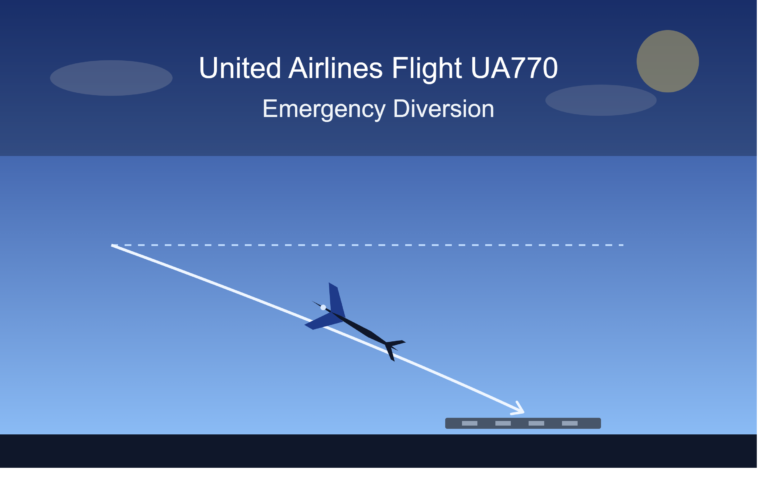
So you saw it too. United Airlines Flight UA770 emergency diversion, trending, and now you want the actual story instead of a headline. Fair enough.
Here’s the annoying part first. The sources don’t agree. One says late May. Another says July. The diversion airport changes depending on which article you land on pun sort of intended. That’s not great if you’re after hard facts, and it’s honestly a decent reminder to double-check anything that blows up online without one clear origin. But strip away the disagreement and the shape of the story holds steady everywhere: something got flagged mid-flight, the crew didn’t take chances, and the plane came down somewhere it wasn’t supposed to.
Rather than pretend we know the exact details nobody’s confirmed, let’s actually talk about what a diversion is. Why it happens. What it’s like if you’re the one on the plane.
Quick version: the UA770 emergency diversion refers to a reported unscheduled landing tied to an in-flight alert. The specifics date, airport shift depending on the source, and no single confirmed report ties them all together. Nobody mentions serious injuries. That part’s consistent.
What Counts As An Emergency Diversion
Not complicated, really. A flight’s in the air, something comes up, and instead of continuing to the planned destination the crew lands somewhere else. That’s the whole definition. Doesn’t matter if it’s United or Delta or anyone this happens constantly across the industry, way more than most passengers assume.
A few things that trigger it:
- A technical or mechanical alert sensor issue, warning light, something flagged
- Cabin pressurization concerns, which matter a lot once you’re at altitude
- A medical emergency onboard
- Weather that makes the planned route a bad idea
- Security issues a disruptive passenger, sometimes a threat that needs checking
What ties all of these together isn’t drama. It’s caution. Crews land early because landing early beats finding out later that the small problem wasn’t actually small.
Also and people mix this up constantly a diversion isn’t a delay. It’s not turning back to the gate either. It means landing somewhere completely different, sometimes hundreds of miles from where the flight was headed. Which explains why the UA770 emergency diversion got attention instead of just being another “flight delayed” tweet nobody noticed.
Why Would Something Like UA770 Get Diverted At All

Most of what’s floating around frames this as precautionary. Not panic. Precaution. A lot of the coverage mentions a Boeing 787 Dreamliner specifically, and those aircraft carry backup systems layered on top of backup systems built that way on purpose, so one glitch doesn’t turn into a real problem.
Pilots don’t wait around when an alert fires. They head for the nearest airport that can handle the aircraft. And that’s basically why these stories end the same way almost every time. Safe landing. Inspection. Everyone eventually gets where they were going, just later than planned.
The Actual Sequence Of Events (In General, Not UA770 Specifically)

Nobody’s confirmed the exact play-by-play for this flight. But here’s roughly how any diversion tends to unfold:
- Something irregular gets picked up by the crew or the aircraft’s systems
- Air Traffic Control gets looped in, emergency declared if needed
- A suitable airport gets chosen runway length, emergency services on the ground, maintenance capability
- Passengers get briefed, cabin crew preps for landing
- Plane lands, engineers inspect before it flies again
Not every airport works here. You need something with a long runway and real fire/rescue capability standing by. Which is exactly why big hub airports keep showing up in stories like this one.
If You’re The One Sitting There, What’s That Actually Like
Scary. Not going to sugarcoat it. But here’s the thing cabin crews train specifically for exactly this moment. Calm voice, clear updates, no unnecessary alarm, even when what’s actually happening behind the scenes is serious enough to warrant declaring an emergency.
There’s a rhythm to how people describe it afterward too. Tense right when the diversion gets announced. Relief once the plane’s actually down. And then airlines usually pick up the pieces rebooking, hotels if it’s needed, ground transport, whatever gets people to their original destination eventually.
Long-haul routes, like whatever route UA770 was reportedly on, need extra thought for the diversion airport. Long runway. Fire and rescue nearby. Customs infrastructure too, if it’s an international flight. That’s the real reason hubs keep coming up.
The Plane Itself Is Doing More Work Than People Realize
Wide-body aircraft 787s especially, since that’s what keeps getting mentioned with UA770 don’t rely on one system for anything critical. Cabin pressurization has backups on backups. On purpose.
So a sensor flagging something doesn’t mean the backup failed too. Usually it just means the monitoring caught a deviation early, exactly the way it’s supposed to. That distinction gets lost constantly in dramatic headlines. An alert isn’t a failure. It’s an early warning, and a trained crew responding cautiously to it which, honestly, is the entire point of having the alert in the first place.
Why This Should Reassure You, Not Scare You

Sounds backwards. Stick with it for a second. Diversions exist specifically so problems get handled on the ground instead of mid-air. The fact that stories like this one almost always end with zero injuries isn’t luck. It’s engineering, crew training, and regulatory oversight from the FAA and IATA, doing exactly what they’re designed to do.
Frequently Asked Questions
What actually caused the United Airlines Flight UA770 emergency diversion? Reports point toward an in-flight alert, several specifically mentioning cabin pressurization. Nothing’s been confirmed by one clear official source, and the details shift depending where you read them.
Did anyone get hurt? Not according to anything reviewed here. Precautionary diversion, safe landing, passengers rebooked afterward that’s the consistent version across sources.
Where did it land, actually? Depends who you ask. Different reports name different airports. Worth treating any single claim with a grain of salt until something official confirms it.
Is this basically a crash? No. Not close. A diversion is a plane landing somewhere other than planned, as a safety call nothing more dramatic than that. Almost all diversions, this one included based on what’s out there, end completely routinely.
How often does this actually happen? More than people think. Crews would rather divert early than gamble on a small issue staying small. That instinct is a big reason flying stays as safe as it does the UA770 emergency diversion, whatever its exact cause turns out to be, fits that pattern pretty well.
Final Thoughts
Whatever the confirmed details eventually turn out to be, the United Airlines Flight UA770 emergency diversion fits a pattern aviation deals with all the time. Something gets flagged. The crew plays it safe. People land fine. Until an airline or an aviation authority nails down the specifics date, airport, root cause hold the exact claims loosely. The bigger picture is what actually matters here, and it’s a simple one: the system did what it’s supposed to do.